


In a significant step towards supporting India’s clean energy goals, scientists at Indian Institute of Technology (Indian School of Mines), Dhanbad have developed a new low-cost electrode material that can make green hydrogen production more affordable and efficient. This innovation is expected to contribute meaningfully to the country’s transition from fossil fuels to cleaner energy alternatives.
The world today is grappling with two major concerns — growing energy demand and rising environmental pollution. Fossil fuels such as coal, oil and gas continue to meet a large part of global energy needs, but they also release harmful greenhouse gases that contribute to climate change. Recognising this challenge, the Government of India launched the National Green Hydrogen Mission with an ambitious target of producing 5 million tonnes of green hydrogen annually by 2030, along with large-scale investments in the sector.
Green hydrogen is considered one of the cleanest energy carriers because it produces only water as a by-product when used. It has high energy density and can be applied in several key sectors, including fertiliser production, petroleum refining, chemical manufacturing, and steel industries. In the future, it is also expected to power fuel-cell vehicles, generate clean electricity and provide high-temperature industrial heat, thereby reducing carbon emissions significantly.
Currently, the cost of green hydrogen production in India ranges between ₹250 and ₹350 per kilogram, which limits its widespread adoption. One of the most promising methods for producing green hydrogen is electrochemical water splitting — a process that uses electricity to break water into hydrogen and oxygen. While the method is environmentally friendly, it requires special materials known as catalysts to speed up the reaction. At present, the most efficient catalysts are made from expensive and rare noble metals like platinum and ruthenium, which increase production costs.
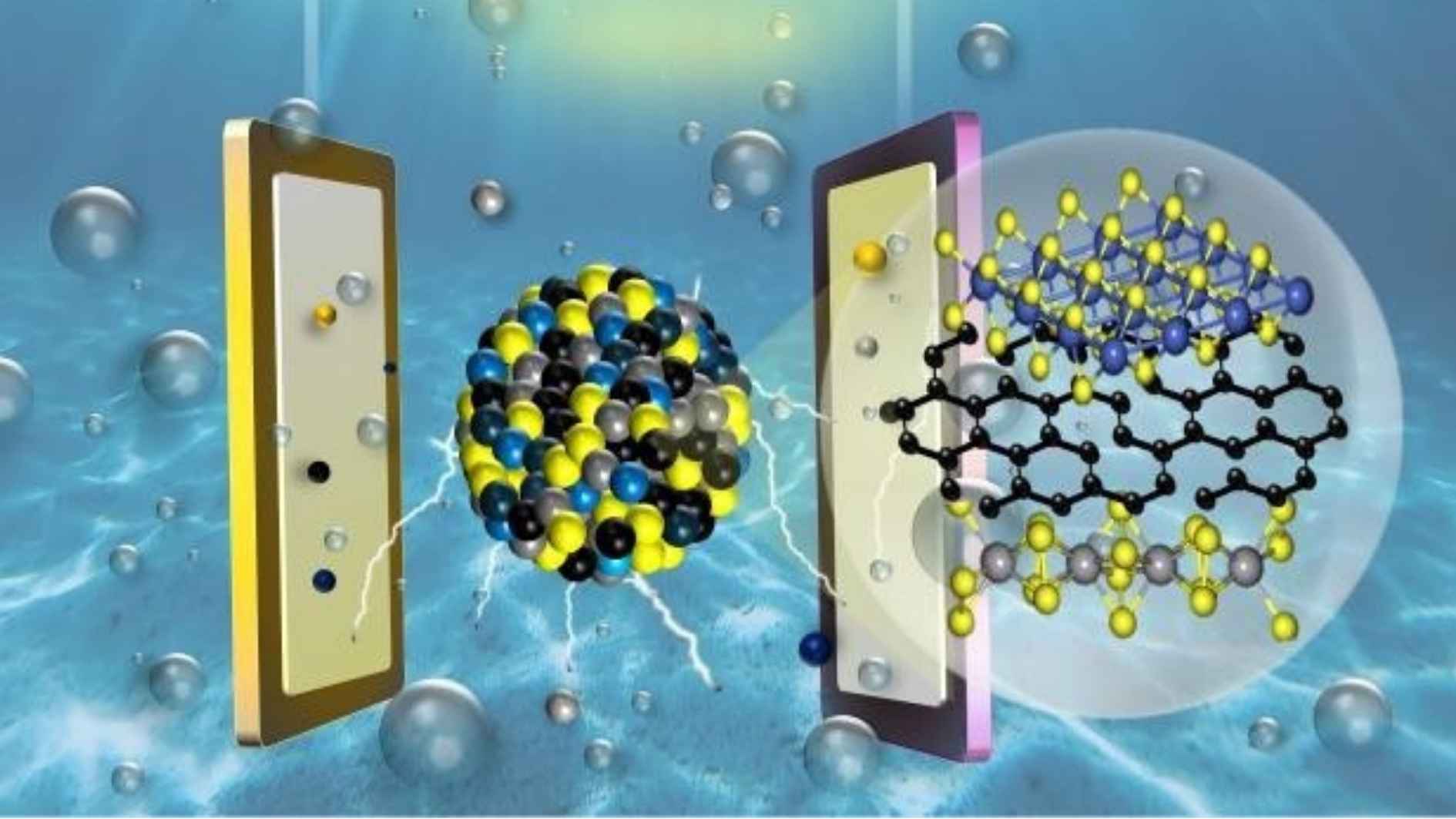
The research was led by Dr. Sk Riyajuddin, INSPIRE Faculty in the Department of Physics, along with his research scholars Priyadarshani Tamang and Rumana Sultana Parvin. To overcome the cost challenge, the team developed a new catalyst using inexpensive and widely available elements such as molybdenum, vanadium, sulphur and carbon. The newly designed material combines advanced transition metal compounds with a highly conducting carbon-based framework. When integrated into a single system, these components work together effectively, reducing the energy required for water splitting and improving overall performance.
Importantly, the team also demonstrated successful green hydrogen production using a commercially available silicon solar cell. This shows that hydrogen can be generated directly using sunlight and water, pointing towards a practical solar-to-hydrogen technology that is both clean and scalable.
The research has been published in the reputed international journal Small (Wiley, 2026). This achievement highlights IIT (ISM) Dhanbad’s growing role in advanced scientific research and its commitment to supporting national missions aimed at building a sustainable and carbon-neutral future.


